
Shoulder pain around Carnival Season

The young person goes to the Carnival ball, puts on a costume, sings, dances, has fun, and together with friends joyfully awaits the arrival of spring, bidding farewell to winter. The older person prepares carnival doughnuts and csöröge fritters, washes window, cleans the house and awaits relatives and acquaintances for the winter‑farewell gathering..
In both cases, it is not surprising, both young and somewhat older, may complain of shoulder impingement syndrome.
Muscles are weak, posture is poor, and the shoulder becomes overloaded. The muscles cannot properly stabilize the shoulder blades, causing the healthy coordinated movement of the shoulder joint and shoulder girdle (the so‑called scapulohumeral rhythm) to be disrupted. When lifting the arm, the head of the humerus bumps against the acromion, and the soft tissues between them rub causing pain and discomfort.This is unpleasant but usually not dangerous. With rest and proper exercises, it often improves. Sometimes anti‑inflammatory drugs are needed, and occasionally a steroid injection locally.
However, In people over 50 shoulder pain may have another cause, not “just” simple overuse.They suddenly wake up with severe pain in the shoulders and hips, and due to the pain they can barely lift or move their arms or legs – as if they had very intense muscle soreness. Sometimes this begins after a cold or flu. Their general condition is poor and they may have a slight fever. Painkillers do not help. Anti‑inflammatories such as diclofenac or naproxen bring no relief. They visit their general practitioner, blood tests are performed, and the results indicate significant inflammation.
What disease could this be?
Polymyalgia rheumatica (PMR), a typical systemic disease of people over 50 years of age, with musculoskeletal symptoms to the fore. It primarily affects the shoulders and the hips, and causes sudden onset of severe pain, prolonged morning stiffness and markedly reduced mobility. Wrist and knee synovitis might also occur. Blood tests confirm marked nflammation.
Although patients with PMR often look seriously ill, in typical cases extensive diagnostic testing is NOT required.
The treatment of choice is low-dose steroids (e.g. Medrol). Within a few days, patients usually experience dramatic improvement. Shoulder pain subsides, mobility returns, and inflammatory blood markers normalize.
In contrast, in case of an atypical case, further evaluation is essential to rule out other diseases in particular a hidden cancer (extreme weight loss, poor general condition) or infection (persistent fever).
In about one-third of patients steroid response is inadequate, they are steroid-resistant , and as such, detailed investigations are also required.
More recently, it has been recognized that PMR not responding to steroids may be associated with subclinical inflammation of blood vessels (vasculitis). Additional imaging tests such as MRI or a PET-scan are necessary. Vasculitis can impair blood supply to organs and may lead to serious complications, including vision loss (blindness), stroke and heart attack. This situation requires immediate treatment with high-dose intravenous steroids, followed by biologic therapy.
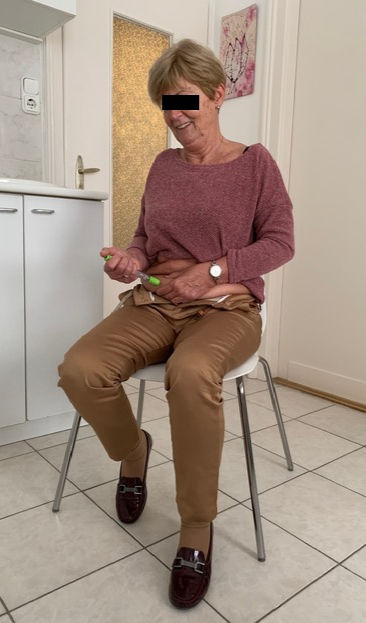
In steroid-resistant, relapsing PMR, without associated vasculitis, biologic therapy has recently also been approved in Europe, availability in Hungary is in process. This treatment is given as a subcutaneous injection, which patients can administer themselves.
Early diagnosis of PMR is crucial. With appropriate tapering of low-dose steroid therapy, most cases of PMR resolve within one year.


